
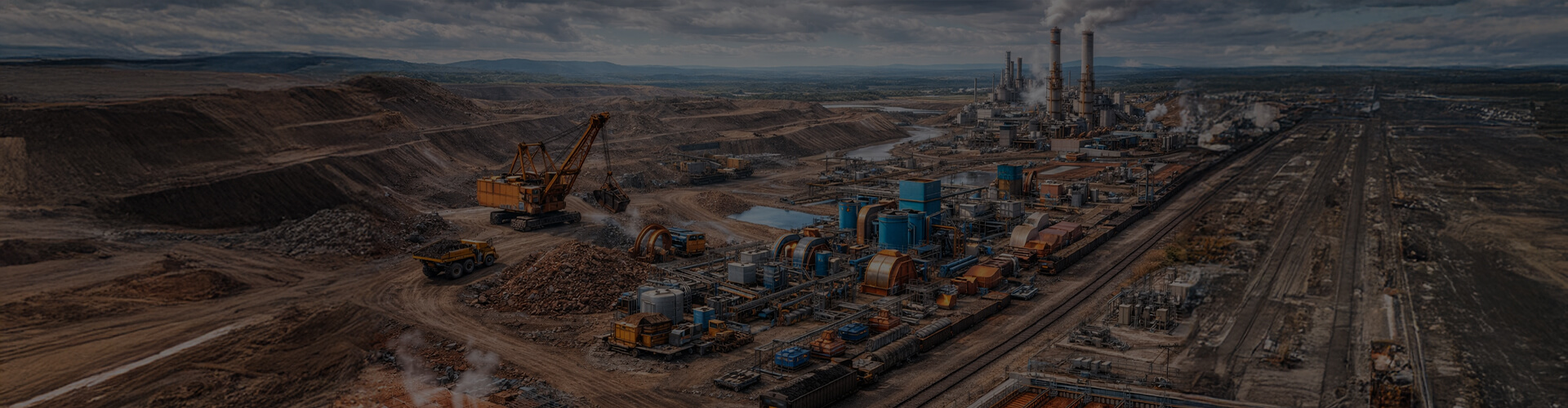
Copper extraction and processing requires comprehensive EPC solutions spanning open-pit or underground mining through electrorefining to produce high-purity cathode copper. Geological assessment programs employ geophysical surveys, extensive drilling, and metallurgical testing to define ore bodies and establish processing parameters. Mining infrastructure includes massive haul trucks (400-tonne capacity), electric rope shovels, drill rigs, and crusher stations reducing ore to transportable sizes. Processing facilities begin with comminution circuits employing SAG mills and ball mills grinding ore to liberation size (typically 100-200 micrometers). Flotation circuits concentrate copper sulfides using reagents that selectively attach to copper minerals, producing concentrates grading 25-35% copper. Hydrometallurgical processing of oxide ores employs heap or dump leaching with sulfuric acid, followed by solvent extraction concentrating copper in organic solutions, and electrowinning depositing pure copper cathodes. Pyrometallurgical routes for sulfide concentrates involve smelting in flash or reverberatory furnaces producing matte (45-75% copper), converting to blister copper (98-99% copper), and fire refining before electrolytic refining achieves 99.99% purity. Supporting infrastructure includes sulfuric acid plants processing sulfur dioxide emissions, tailings management facilities, water treatment systems, and electrical substations supplying processing power requirements of 150-200 MW for large operations.


© Enecovery 2026. Proprietary technology and content. All rights reserved.