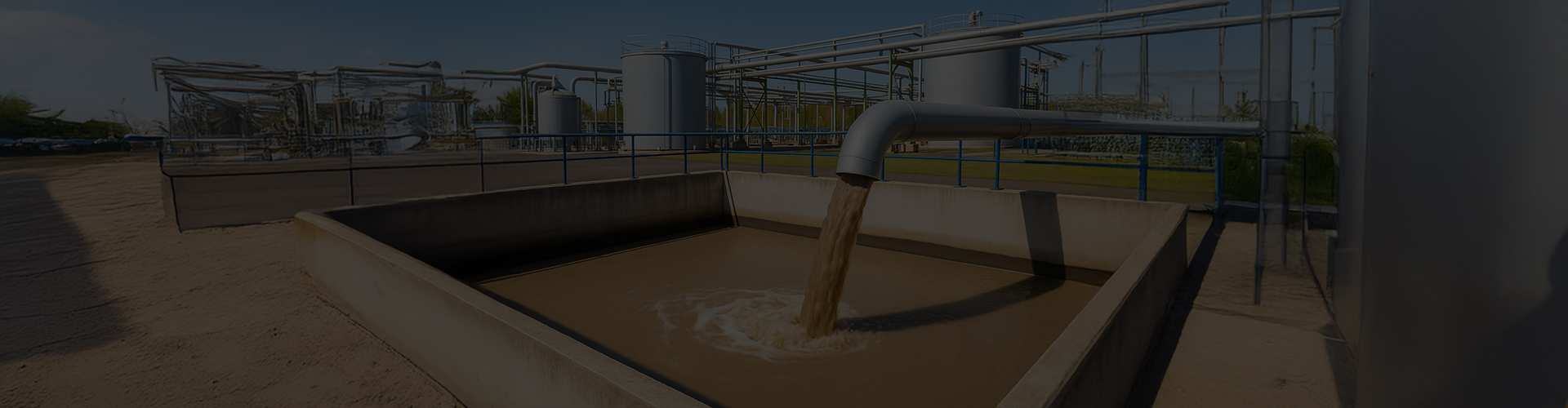
Sludge treatment is a multi-stage process that begins with thickening to reduce volume
by removing water,
followed by dewatering to further decrease moisture content. Next, digestion breaks down organic matter
and microorganisms,
often through anaerobic or aerobic processes, to stabilize the sludge. Finally, depending on its
intended use, the sludge
undergoes disinfection if it will be reused in agriculture, or it is prepared for final disposal via
methods like landfills,
incineration, or land application.
Thickening
This is typically the first step, where sludge is concentrated to reduce its volume and make it easier
to handle.
It's often done in a gravity thickener or by using dissolved-air flotation, which uses air bubbles to
float solids to the surface.
Dewatering
This stage removes more water from the sludge, further reducing its volume and transportation costs.
Mechanical methods include centrifugation, belt filter presses, and screw presses.
Drying beds or lagoons can also be used for natural evaporation.
Digestion
This process stabilizes the sludge by reducing its organic content and the number of pathogens.
It can be done through biological processes (anaerobic or aerobic) or through thermal processes.
Anaerobic digestion: Occurs in the absence of oxygen, producing biogas (a mix of
methane and carbon dioxide)
that can be used as a fuel source.
Thermal digestion: Involves heating the sludge to high temperatures to break down
organic matter.
Disinfection
This step is crucial if the sludge is to be used for agricultural purposes.
It ensures that pathogens are killed, as anaerobic and aerobic digestion don't always eliminate them
entirely.
Methods include pasteurization, which uses heat, or using chemical treatments.
Disinfection is not necessary if the sludge is headed for incineration or landfilling.
Disposal
The final step is the safe disposal of the treated sludge.
Common methods include:
- Land application: Reuse as a soil conditioner or fertilizer.
- Incineration: Burning the sludge to further reduce its volume, sometimes with
energy recovery.
- Landfilling: Burying the sludge in a designated landfill site.